- The Neural Frontier
- Posts
- The US government is slowing down OpenAI’s next model!
The US government is slowing down OpenAI’s next model!
Also: RAMageddon is in full swing as Apple increases prices, while Anthropic is quietly becoming a consumer AI company 🤖.

The Neural Frontier
June 26, 2026
The browser that reads the room before you ask.
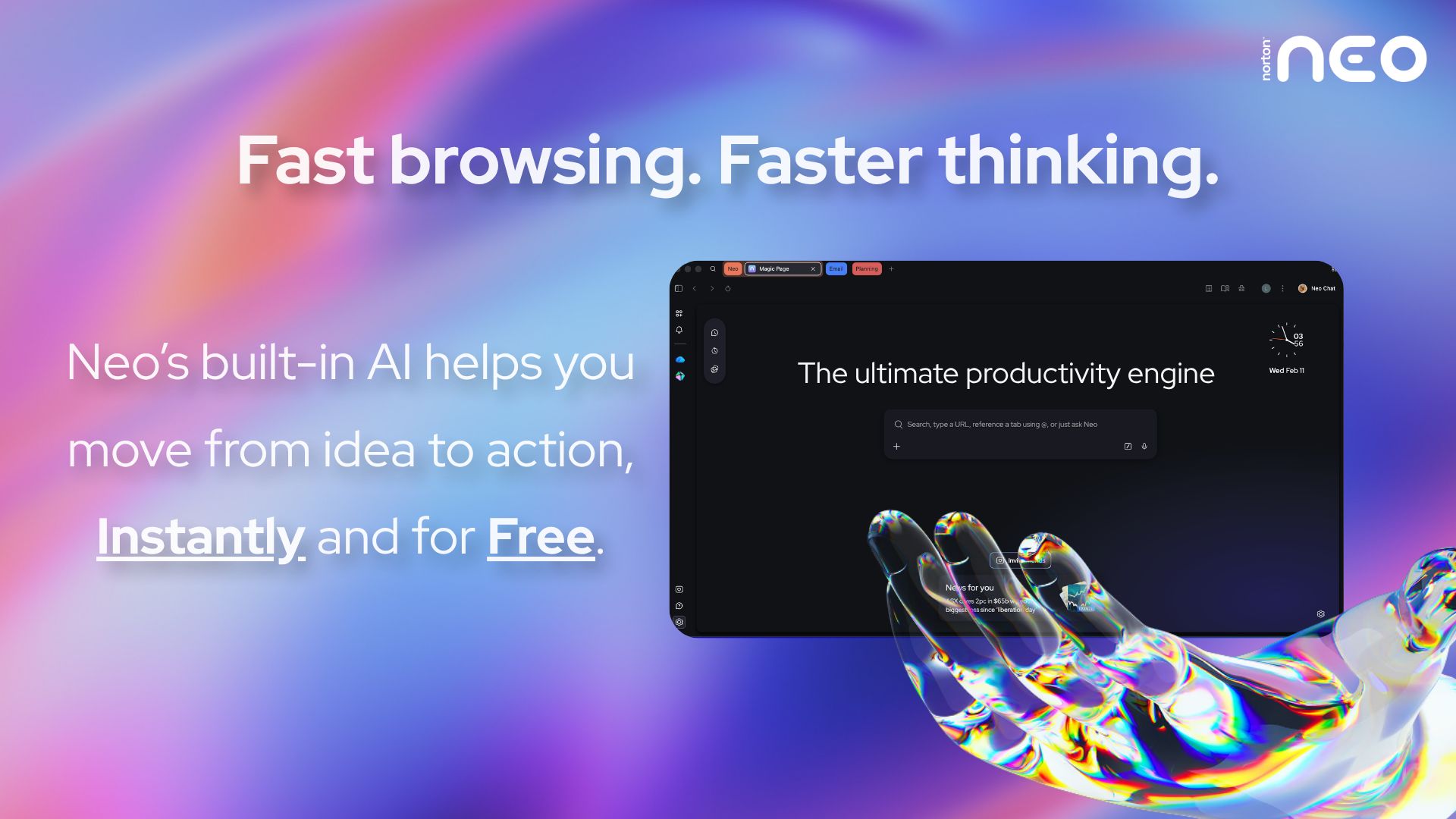
Most browsers get you to the page. Norton Neo gets you to the answer. Magic Box understands your intent before you finish typing — no prompting, no switching apps, no copy-pasting. Built-in AI, instantly and for free. Privacy handled by Norton, by default.

Well, as the headlines show, someone’s on a spree of AI-related plug-pulling 😏. First Fable 5, and now OpenAI’s new model.
Forward thinkers, welcome to another issue of The Neural Frontier.
This one needs no introduction, let’s dive right in!
In a rush? Here's your quick byte:
🙅 The US government is slowing down OpenAI’s next model!
📈 RAMageddon is in full swing as Apple increases prices.
🤖 Anthropic is quietly becoming a consumer AI company!
⚡ The Neural Frontier’s weekly spotlight: 3 AI tools making the rounds this week.

Source: Benjamin Fanjoy / Getty Images
For years, frontier AI companies largely decided for themselves when a model was ready for release. That era may be ending.
According to reports, OpenAI's upcoming GPT-5.6 won't launch with a traditional public release. Instead, access will initially be restricted to a small group of approved partners, with the US government reportedly reviewing and approving customers during the preview period.
🏛️ From "hands-off" to hands-on
What's striking is how quickly the policy environment has shifted. The Trump administration initially positioned itself as taking a relatively light-touch approach to AI regulation. Yet in recent months, Washington has steadily moved toward greater oversight of frontier models.
According to reports, OpenAI worked closely with government officials ahead of GPT-5.6's release, and agencies including the Office of the National Cyber Director and the Office of Science and Technology Policy reportedly pushed for a limited rollout.
The goal appears to be simple: understand the capabilities and risks of the model before allowing unrestricted public access.
🧠 Why GPT-5.6 may be different
OpenAI hasn't publicly detailed GPT-5.6's capabilities. But the fact that regulators are reportedly requesting a customer-by-customer rollout suggests concerns that go beyond typical model launches.
Much of the discussion centers on cybersecurity. Modern frontier models can already:
Identify software vulnerabilities
Generate sophisticated malware
Automate portions of penetration testing
Execute complex multi-step technical workflows
The concern is that future models may dramatically accelerate these capabilities, potentially giving both defenders and attackers powerful new tools.
That's why governments are increasingly treating certain frontier models less like software products and more like dual-use technologies.
🔄 Anthropic may have seen this coming
What's particularly interesting is how much this mirrors Anthropic's approach to Mythos.
Earlier this year, Anthropic limited access to its powerful cybersecurity-focused model through Project Glasswing, arguing that broad public release could create security risks before sufficient safeguards were in place.
At the time, many observers debated whether that decision was genuine caution, competitive positioning, or marketing. Now OpenAI appears to be moving in a similar direction, although reportedly under pressure from government officials rather than entirely by choice.

Source: Allison Johnson / The Verge
For the past year, the AI industry has been warning about RAMageddon: a global shortage of memory chips driven by the enormous infrastructure demands of modern AI systems.
Until now, most people could ignore it. That changed this week when Apple, arguably the company best positioned to absorb supply chain shocks, raised prices across much of its hardware lineup.
🍎 Why Apple raising prices matters
Apple isn't known for reacting quickly to component cost increases. Its scale gives it enormous purchasing power. Its margins give it room to absorb shocks. And historically, it has preferred to protect pricing stability rather than pass costs directly to consumers.
That's what makes these increases so notable. The company has reportedly raised prices across Macs, iPads, HomePods, and Vision Pro devices, with some products increasing by hundreds of dollars.
The immediate cause appears to be memory. AI infrastructure is consuming unprecedented quantities of DRAM and NAND storage chips, creating shortages across global supply chains and driving costs sharply higher.
If Apple can't fully absorb those increases, many other hardware companies probably can't either.
🤖 AI's hidden hardware tax
Most discussions about AI focus on models, agents, and software. But none of those systems exist without hardware.
Every new frontier model requires enormous amounts of memory to train and run. Every new data center requires vast quantities of storage. Every new AI feature added to consumer devices increases pressure on the same supply chains that power laptops, phones, tablets, and servers.
The result is that AI is beginning to influence technology pricing far beyond AI products themselves. Consumers may never use a frontier model directly, but they may still end up paying for it.
📈 The ripple effects are only beginning
If current trends continue, memory could become one of the most important bottlenecks in the technology industry over the next few years. Potential consequences include:
More expensive consumer electronics
Higher cloud computing costs
Increased costs for AI infrastructure providers
Greater competition between AI companies and device manufacturers for components
More investment in memory manufacturing and supply chain expansion
The irony is that AI is supposed to make technology cheaper and more capable over time. In the short term, it may make many products more expensive.

Source: TechCrunch/Indagari
For most of the AI boom, the consumer story has belonged to ChatGPT. Anthropic's narrative has been different.
Claude was seen as the tool developers preferred, startups loved, and enterprises trusted. OpenAI dominated consumer mindshare while Anthropic dominated technical credibility.
New data suggests that the distinction may be breaking down.
According to transaction data from Indagari, paying Claude customers have increased roughly 75% since January 2026, with both consumer revenue and subscriptions continuing to climb month after month. That's still far from ChatGPT's scale, but the direction of travel is becoming impossible to ignore.
🧠 Claude is escaping the developer niche
One of the biggest assumptions about Anthropic has been that its growth is primarily driven by technical users. Claude Code certainly helped fuel that narrative.
But multiple data points now suggest consumer adoption is accelerating independently of the developer market.
DataCamp, which serves roughly 20 million learners, reports that "Claude" has become the most searched term on its platform, even surpassing searches for "AI."

Source: DataCamp
Even more surprising, demand for Claude courses among self-directed learners is reportedly outpacing ChatGPT courses by three to one, with interest increasing dramatically over the past month.
⚔️ The competitive gap is narrowing
None of this means ChatGPT is losing. Far from it.
ChatGPT remains the dominant consumer AI product by virtually every meaningful metric: users, subscriptions, awareness, and overall market share.
But market leadership and market momentum are different things. OpenAI's challenge is that when you're already operating at enormous scale, growth naturally slows.
Anthropic is benefiting from the opposite dynamic. Every new user, every new subscription, and every new product launch creates larger percentage gains because it's growing from a smaller base.
That's making Claude look increasingly like a legitimate second consumer platform rather than a specialized alternative.
⚡ The Neural Frontier’s weekly spotlight: 3 AI tools making the rounds this week.
1. 📝 Reline is a bot-free AI meeting notetaker that captures calls right on your device, then turns them into shareable summaries, action items, and follow-ups pushed straight to Slack, Notion, or Linear.
2. 🧰 SnapVee Studio is an all-in-one AI content workspace that downloads, transcribes, summarizes, and remixes videos — plus generates AI images and video — for creators in a single workflow.
3. 🎨 Gamma is an AI design tool that turns any idea into polished presentations, websites, documents, and social content in minutes — no design skills required.
Wrapping up…
AI policy and governance are beginning to look like recurring themes, with the amount of government involvement these days. And who knows just how far it’ll go.
The above, plus the hardware shortage and the pace at which teams are building, is a recipe for a pretty interesting year ahead. But hey, we might be wrong, or not 😏.
Find out next week on the Neural Frontier 👋!
PS: If you’re the “friend” this mail was forwarded to, and you enjoyed it, hit the Subscribe button to see more content like this every week 🙂.