- The Neural Frontier
- Posts
- Google’s Gemini to power Siri!
Google’s Gemini to power Siri!
Also: Slackbot goes agentic, while Anthropic unveils new Cowork tool 🤖.

The Neural Frontier
January 16, 2026

Yes, you read that headline right. It’s official: Gemini will power Siri and other Apple AI features.
Hey, and welcome to another issue of the Neural Frontier!
We’re spoilt for choice today in terms of coverage, as you can probably tell. But we’re just gonna unpack one after the other, from Google and Apple’s partnership to Anthropic’s new Cowork tool.
Ready or not, here we go!
In a rush? Here's your quick byte:
🤖 Google’s Gemini will power Siri!
🦾 Slackbot goes agentic.
🧑💻 Anthropic unveils new Cowork tool!
🎯 Everything else you missed this week.
⚡ The Neural Frontier’s weekly spotlight: 3 AI tools making the rounds this week.
Source: Nikolas Kokovlis/NurPhoto / Getty Images
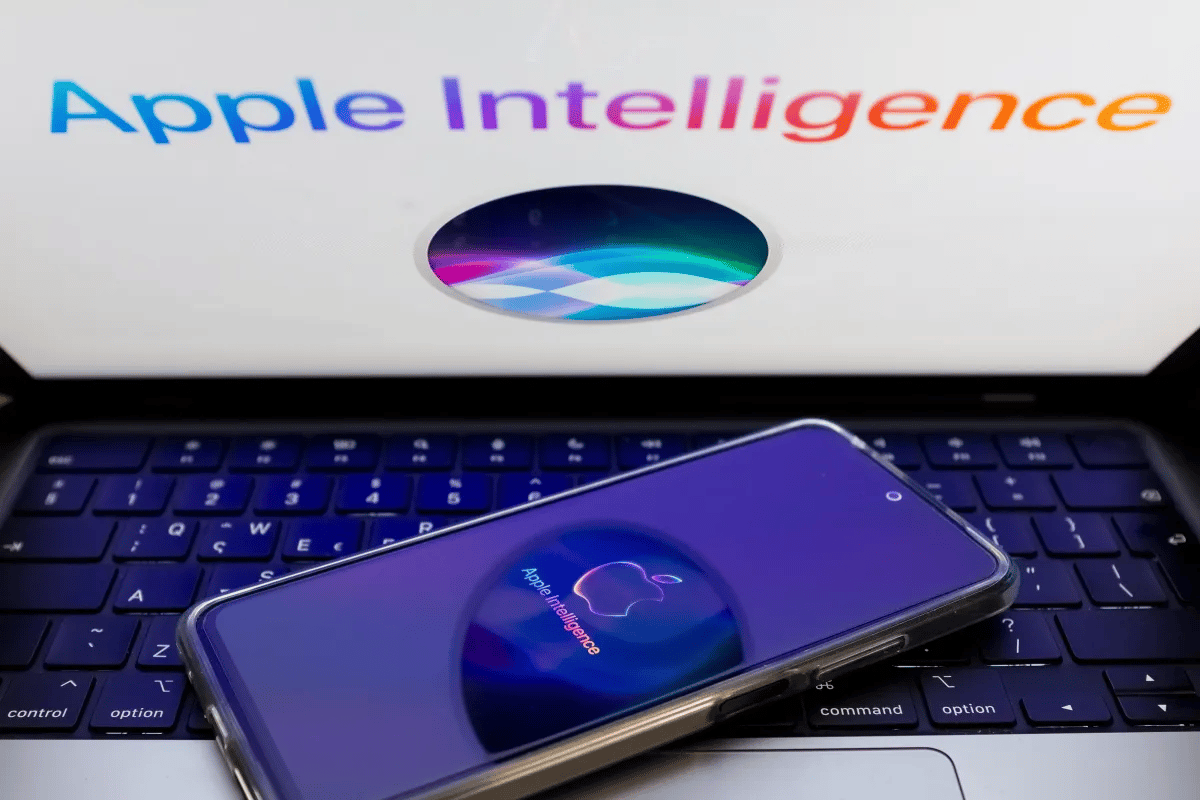
This is one partnership few expected to see made official. Apple has confirmed a multi-year collaboration with Google, under which Google’s Gemini models and cloud infrastructure will form the foundation of future Apple Foundation Models — powering upcoming Apple Intelligence features, including a more personalized Siri.
In a joint statement, the companies said Apple selected Google after “careful evaluation,” calling Gemini the “most capable foundation” for the experiences Apple wants to deliver next.
🧠 What the deal actually means
This isn’t Apple outsourcing its AI ambitions — it’s actually Apple choosing its underlying engine. Under the agreement:
Apple will use Gemini models + Google Cloud as a base layer
Apple Intelligence will still run on-device and via Private Cloud Compute
Apple retains control over product design, UX, and privacy guarantees
The deal is non-exclusive, leaving Apple room to work with others later
Reports suggest Apple may be paying Google around $1 billion for access, though neither company has confirmed financial terms.
📉 Why Apple needed this
Apple’s AI strategy has been deliberately subtle, sometimes to its own detriment.
While Apple rolled out Apple Intelligence in 2024 with features like photo search and notification summaries, Siri has lagged behind rivals like ChatGPT and Gemini in perceived intelligence and flexibility. The company has also delayed its promised “more personalized Siri” multiple times.
Apple says that the upgrade is finally coming this year, with previous reports pointing to a spring launch.
🔐 Privacy stays Apple-controlled
Apple was quick to stress what isn’t changing. Even with Gemini under the hood:
Most processing will still happen on device
More complex requests will run through Apple’s Private Cloud Compute
Apple says its industry-leading privacy standards remain intact
In other words, Gemini supplies the intelligence — Apple controls the boundaries.
Source: Salesforce
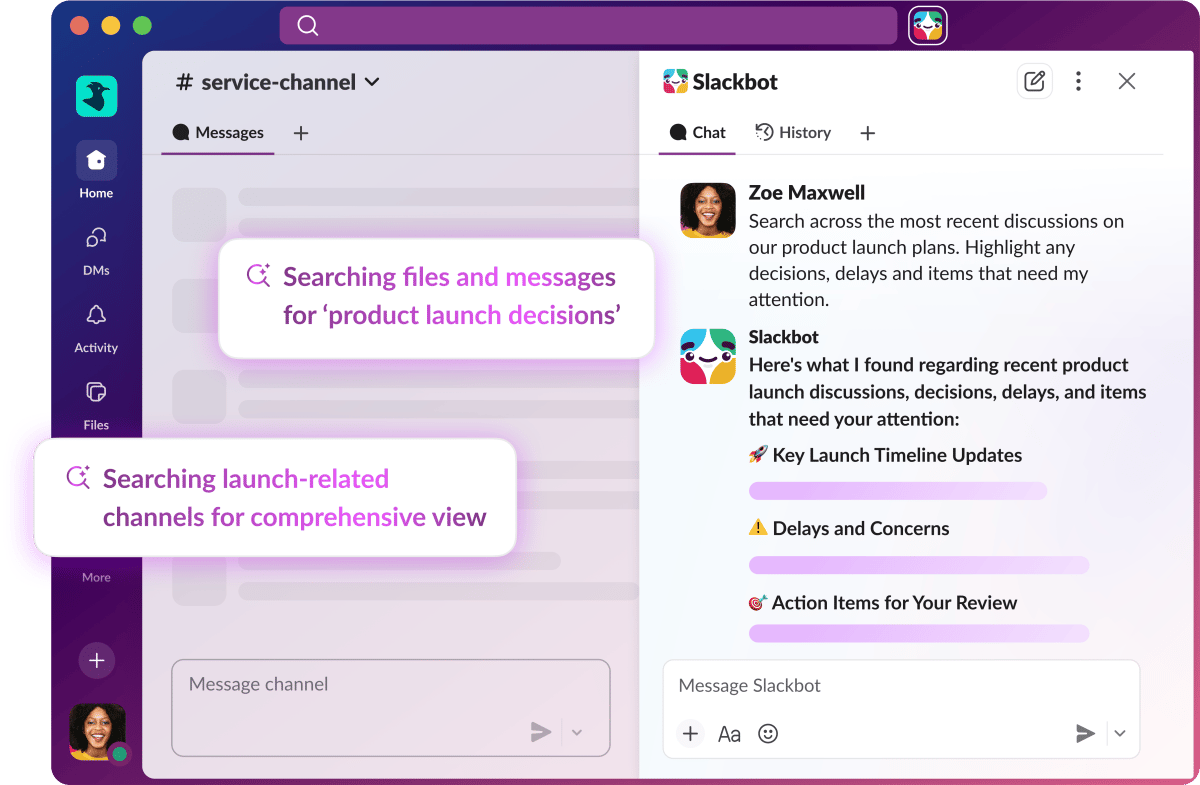
Slack has rebuilt Slackbot from the ground up, transforming it from a notification helper into a full-fledged AI agent that can find information, draft content, and take action — all without leaving Slack. The new Slackbot is now generally available to Business+ and Enterprise+ customers.
Salesforce CTO Parker Harris says the goal is ambition itself: make Slackbot as indispensable — and as viral — as ChatGPT, but for work.
🧠 What changed (and why it’s different)
This isn’t a bolt-on assistant. Salesforce says the new Slackbot is an agentic experience, designed to act on your behalf, not just answer questions. Slackbot can:
Search across channels, messages, files, and canvases
Draft emails and documents in your voice
Schedule meetings and prep agendas
Pull information from connected tools like Google Drive and Microsoft Teams (with permission)
Because it lives inside Slack, it starts with context — who you work with, what channels matter, and how decisions actually get made.
🧩 Built for enterprise reality
Rather than dropping a generic chatbot into Slack, the company leaned into what Slack already knows: conversations, permissions, and workflows. Slackbot only sees what you can see, respects existing access controls, and cites where information comes from.
That makes it less like an intern who needs constant briefings — and more like a teammate who was already in the meeting.
📈 Adopted, not mandated
Salesforce tested Slackbot internally for months before release. Harris joked the company likes to “drink its own champagne,” but the results were serious.
Slackbot became the most adopted internal tool Salesforce has released, driven by usage rather than policy. According to Harris, that organic uptake was the clearest signal of product–market fit.
🧠 What it’s good at, in practice
Slackbot’s strengths show up in the daily grind:
Instant catch-up: Summarizes decisions across threads, huddles, and files so you don’t hunt for context
First drafts: Creates emails, briefs, outlines, and meeting canvases tailored to your role and tone
Deep file analysis: Pulls insights from PDFs, decks, transcripts, and spreadsheets — then connects them back to ongoing work
The value proposition is simple: less searching, less switching, more doing.
🔐 Trust and security baked in
Slack is emphasizing that this is enterprise AI, not consumer AI dropped into work.
Slackbot runs behind Slack AI Guardrails, respecting permissions, preventing prompt injection, and keeping interactions private. Data stays within the boundaries teams already expect, which is critical if Slackbot is going to act — not just suggest.

Source: Anthropic
This week, Anthropic announced Cowork, a new feature inside the Claude desktop app that brings the power of Claude Code to everyday knowledge work — without the command line, environments, or technical setup.
Cowork is currently available as a research preview for Claude Max subscribers, with a waitlist open for other plans.
🧠 What Cowork actually does
Cowork lets you point Claude at a specific folder on your computer and then work with those files using plain-language instructions in chat.
Once granted access, Claude can read, edit, create, and organize files in that folder — acting less like a chatbot and more like a junior collaborator who executes tasks end to end.
Anthropic frames it as “Claude Code for the rest of your work,” and the positioning fits.
📂 Why this is different from a normal chat
Cowork isn’t just conversational — it’s agentic. Instead of responding turn by turn, Claude:
Makes a plan
Executes multiple steps autonomously
Loops you in as it goes
You can queue tasks, give feedback mid-execution, and let Claude work in parallel — closer to leaving instructions for a coworker than prompting a chatbot.
Because access is folder-scoped, users have a simple, visible way to control what Claude can and can’t touch.
🧪 What people are using it for
While Anthropic highlights examples like building an expense report from receipt screenshots, Cowork’s real power shows up in broader, non-coding workflows:
Organizing messy downloads or media folders
Analyzing documents, conversations, or screenshots
Drafting reports from scattered notes
Managing social or research content
This mirrors a trend Anthropic noticed earlier: many Claude Code users were already using it for everything except code.
⚠️ Power comes with real risks
Cowork inherits the same strengths — and dangers — as Claude Code.
Because it can take multiple actions without constant user approval, Anthropic explicitly warns about:
Ambiguous instructions that lead to unintended edits or deletions
Prompt injection risks, especially when files include external content
Claude asks before taking major actions, but Anthropic stresses that users should be precise and cautious — especially while learning how the tool behaves.
“This might be the first time you’re using something that moves beyond a simple conversation,” the company notes.
🎯 Everything else you missed this week.

Source: Google
⚡ The Neural Frontier’s weekly spotlight: 3 AI tools making the rounds this week.
1. 🌴 Jungle is an AI study tool that generates flashcards, multiple choice questions, and practice tests from lecture slides, PDFs, videos, and textbooks, helping 1 million+ students master material through spaced repetition and gamified learning.
2. 🎥 Boom is a Mac presentation and screen recording app that enables live layout switching, cinematic zooming, and branded overlays for polished video presentations without editing, working seamlessly with Zoom, Meet, and Teams.
3. 📊 Pane is an AI-powered spreadsheet platform where users create, analyze, and manipulate data through natural language commands, featuring auto-generated dashboards, interactive charts, and seamless CSV/Excel/PDF imports with cloud synchronization.
Blink…, and you’ll miss it!
What better way to sum up this week? It’s been a flurry of updates, product releases, and everything in between.
As always, we can’t wait to see what the tide brings in next week.
Till then, stay curious, and we’ll catch you next week on the Neural Frontier!