- The Neural Frontier
- Posts
- Claude Opus 4.8 is here!
Claude Opus 4.8 is here!
Also: Anthropic raises $65B in its Series H, while the Pope publishes his first AI manifesto 📜.

The Neural Frontier
May 29, 2026
In partnership with

Fast browsing. Faster thinking.
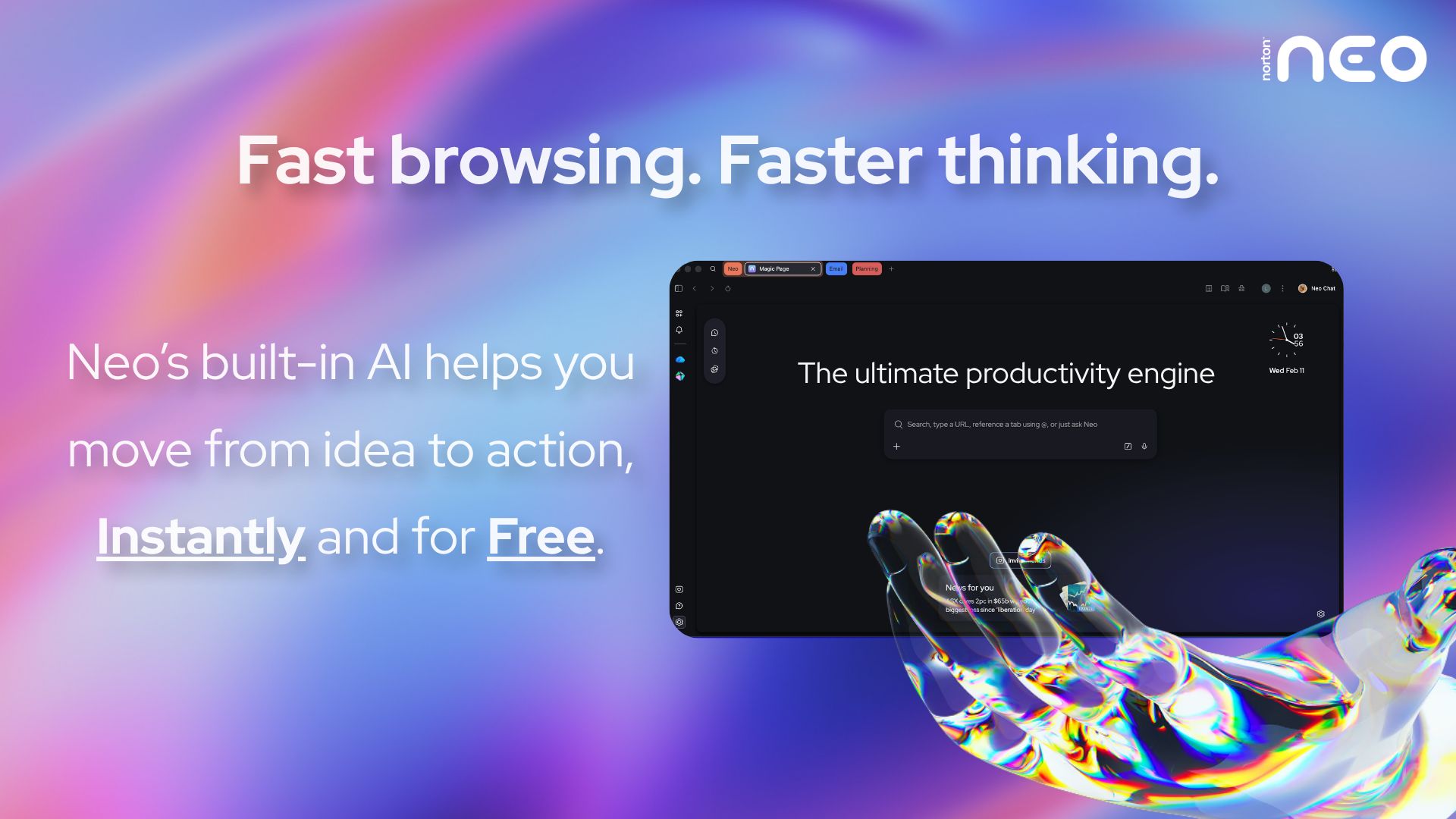
Your browser gets you to a page. Norton Neo gets you to the answer. The first safe AI-native browser built by Norton moves with you from idea to action without slowing you down. Magic Box understands your intent before you finish typing. AI that works inside your flow, not beside it. No prompting. No copy-pasting. No switching apps.
Built-in AI, instantly and for free. Privacy handled by Norton. Built-in VPN and ad blocking protect you by default. No configuration. No extra apps. Nothing to think about.
Fast. Safe. Intelligent. That's Neo.

Last week was clearly Google’s time in the spotlight. And this week? The folks from Anthropic are basking in it.
Yep, you read those headlines right. Anthropic announced another model AND another funding round, as they push closer to their IPO.
Plus, we have coverage of the Pope’s AI manifesto, which has been making the rounds this week.
Ready or not, let’s dig in! 😏
In a rush? Here's your quick byte:
🤖 Claude Opus 4.8 is here!
💲 Anthropic raises $65B in its Series H.
📜 The Pope publishes his first AI manifesto!
⚡ The Neural Frontier’s weekly spotlight: 3 AI tools making the rounds this week.

Source: Anthropic
Just 41 days after launching Opus 4.7, Anthropic has released Claude Opus 4.8, its latest flagship model. The accelerated release cadence comes as competition from OpenAI, Google, and Perplexity intensifies, and after some users felt Opus 4.7 wasn't the leap they expected.
Anthropic says Opus 4.8 improves across coding, reasoning, agentic tasks, and knowledge work benchmarks, but the company is emphasizing something different this time: better judgment.

Source: Anthropic
Rather than simply being smarter, Opus 4.8 is designed to be more honest about uncertainty and less likely to confidently push through flawed assumptions.
⚡ The bigger story: Dynamic Workflows
Alongside the model release, Anthropic introduced Dynamic Workflows, a new Claude Code feature currently available in research preview.
Instead of relying on a single AI agent, Claude can now:
Break large projects into hundreds of parallel sub-agents
Coordinate and verify work across those agents
Consolidate outputs into a final result before reporting back
Anthropic says this enables Claude Code to tackle projects like codebase-wide migrations involving hundreds of thousands of lines of code from planning through testing and deployment.
🔭 Mythos is still waiting in the wings
Anthropic also used the launch to tease what's next. The company says it's continuing work on the safeguards needed to release Mythos-class models, the more powerful systems currently being tested through its cybersecurity-focused Project Glasswing initiative.
Anthropic says it expects broader availability in the coming weeks once the necessary protections are in place.
The announcement reinforces a trend we've seen across the industry over the past few months:
OpenAI is expanding Codex into a multi-agent software platform.
Perplexity is building Computer as a long-running digital worker.
Google is embedding reusable AI workflows throughout Workspace and Chrome.
Anthropic's answer is becoming clearer: smarter agents, better judgment, and systems capable of coordinating large amounts of work autonomously.
Opus 4.8 may be a model upgrade on paper, but Dynamic Workflows feels like the more important signal of where Claude is heading next.

Source: Anthropic
Anthropic has announced a massive $65 billion Series H funding round, valuing the company at $965 billion post-money. The raise comes just as the AI company released Claude Opus 4.8 and could be its final private fundraising round before an anticipated IPO.
The investor list reads like a who's who of global finance. Altimeter, Sequoia, Coatue, Dragoneer, Greenoaks, Capital Group, and D1 Capital all participated, alongside major institutional investors like Fidelity, Blackstone, Brookfield, and DST Global.
Strategic partners, including Samsung, SK Hynix, and Micron, also joined the round, underscoring how closely the future of AI is becoming tied to the semiconductor supply chain.
📈 Claude's enterprise momentum is paying off
Anthropic says the fresh capital will be used to expand compute infrastructure, accelerate safety and interpretability research, and scale the Claude ecosystem.
The company's growth trajectory helps explain investor enthusiasm:
Annualized revenue has reportedly surpassed $47 billion
Enterprise adoption continues to accelerate, particularly around Claude Code
The company is targeting its first operating profit after years of aggressive investment
The raise also follows a string of major infrastructure announcements, including new compute agreements with Amazon, Google, Microsoft, NVIDIA, and, most recently, SpaceX.
🤖 The AI IPO race is officially on
The timing is hard to ignore.= Anthropic announced the funding on the same day it launched Claude Opus 4.8, a model focused on stronger agentic capabilities, coding performance, and improved self-correction.
At the same time, the company continues preparing broader access to its more advanced Mythos-class models, which remain limited due to cybersecurity concerns.
More broadly, this round signals that the race between Anthropic, OpenAI, and SpaceX/xAI is increasingly becoming a battle of scale. OpenAI raised $122 billion earlier this year at an $852 billion valuation, while SpaceX is reportedly targeting a valuation approaching $2 trillion ahead of its own IPO.
For years, investors debated whether AI would produce trillion-dollar companies. Now the question seems to be which one gets there first.

Source: ALBERTO PIZZOLI/AFP / Getty Images
Pope Leo XIV has published his first encyclical, Magnifica Humanitas ("The Greatness of Humanity"), a 200-page document framed around artificial intelligence. But despite the headline topic, the document is less about algorithms and more about something much older: power.
The pope argues that AI is simply the latest technology exposing long-standing societal problems, concentrated wealth, political influence, inequality, misinformation, and the growing ability of powerful institutions to shape public life without meaningful oversight.
One of the document's central warnings is that AI risks amplifying existing power imbalances.
According to Pope Leo, the organizations that control the capital, data, infrastructure, and expertise behind AI will inevitably gain even more influence unless strong accountability mechanisms exist.
⚖️ A critique of concentration, not innovation
Throughout the encyclical, Pope Leo repeatedly returns to a familiar theme in Catholic social teaching: technology itself is not the problem.
The problem emerges when technological power becomes concentrated among a small group of actors who are insulated from public accountability. He specifically warns that AI could accelerate:
Economic inequality by concentrating value among those who already control capital and data
Information manipulation through algorithmic influence, misinformation, and deepfakes
Rather than calling for a slowdown in innovation, Pope Leo advocates for stronger oversight, broader participation in AI governance, and systems that prioritize the common good over commercial or geopolitical dominance.
🌍 A challenge to the AI arms race
One of the strongest sections of the document focuses on the global competition to build increasingly powerful AI systems.
Pope Leo criticizes the assumption that larger models, larger datasets, and greater technical capability automatically translate into legitimate authority or leadership. He argues that societies should reject the idea that technological superiority alone grants the right to shape the future.
The message lands at a particularly interesting moment. Governments, frontier labs, and tech giants are all racing toward more capable agentic systems, while debates around regulation, national security, and AI governance continue to intensify.
⚡ The Neural Frontier’s weekly spotlight: 3 AI tools making the rounds this week.
1. 📚 Jenni AI is an AI research writing assistant that helps academics read, write, and cite, with every claim traceable back to the exact source, across 200M+ papers.
2. 🖼️ Replifine is an AI UI cloning tool that converts screenshots and wireframes into pixel-perfect, production-ready code, running up to 4 AI models simultaneously for instant framework exports.
3. 🎬 Descript is an AI video and podcast editor that lets you edit footage by editing text, with tools for transcription, filler word removal, voice cloning, and an AI co-editor that handles the heavy lifting for you.
In conclusion…
Product release SZN is in full tow, and more remarkably, funding season seems to be in motion as well.
Over the past 2 weeks, we’ve seen big steps from Google and Anthropic, which makes us wonder: what are the folks at OpenAI brewing?
Only one way to find out: we’ll catch you next week on the Neural Frontier 👋!
PS: If you’re the “friend” this mail was forwarded to, and you enjoyed it, hit the Subscribe button to see more content like this every week 🙂.