- The Neural Frontier
- Posts
- Anthropic unveils Opus 4.6!
Anthropic unveils Opus 4.6!
Also: SpaceX acquires xAI, while OpenAI rolls out OpenAI Frontier 🤖.

The Neural Frontier
February 06, 2026
Double whammy of updates? We’ll do you one better.
Hello and welcome to issue #145 of the Neural Frontier!
This week’s headlines have been pretty hard to miss. Some might say they’ve been too loud. As always, we’re here to bring sanity to the chaos.
Let’s unpack!
In a rush? Here's your quick byte:
🤖 Anthropic unveils Opus 4.6!
💸 SpaceX acquires xAI.
🦾 OpenAI rolls out OpenAI Frontier!
🎯 Everything else you missed this week.
⚡ The Neural Frontier’s weekly spotlight: 3 AI tools making the rounds this week.
Source: Anthropic
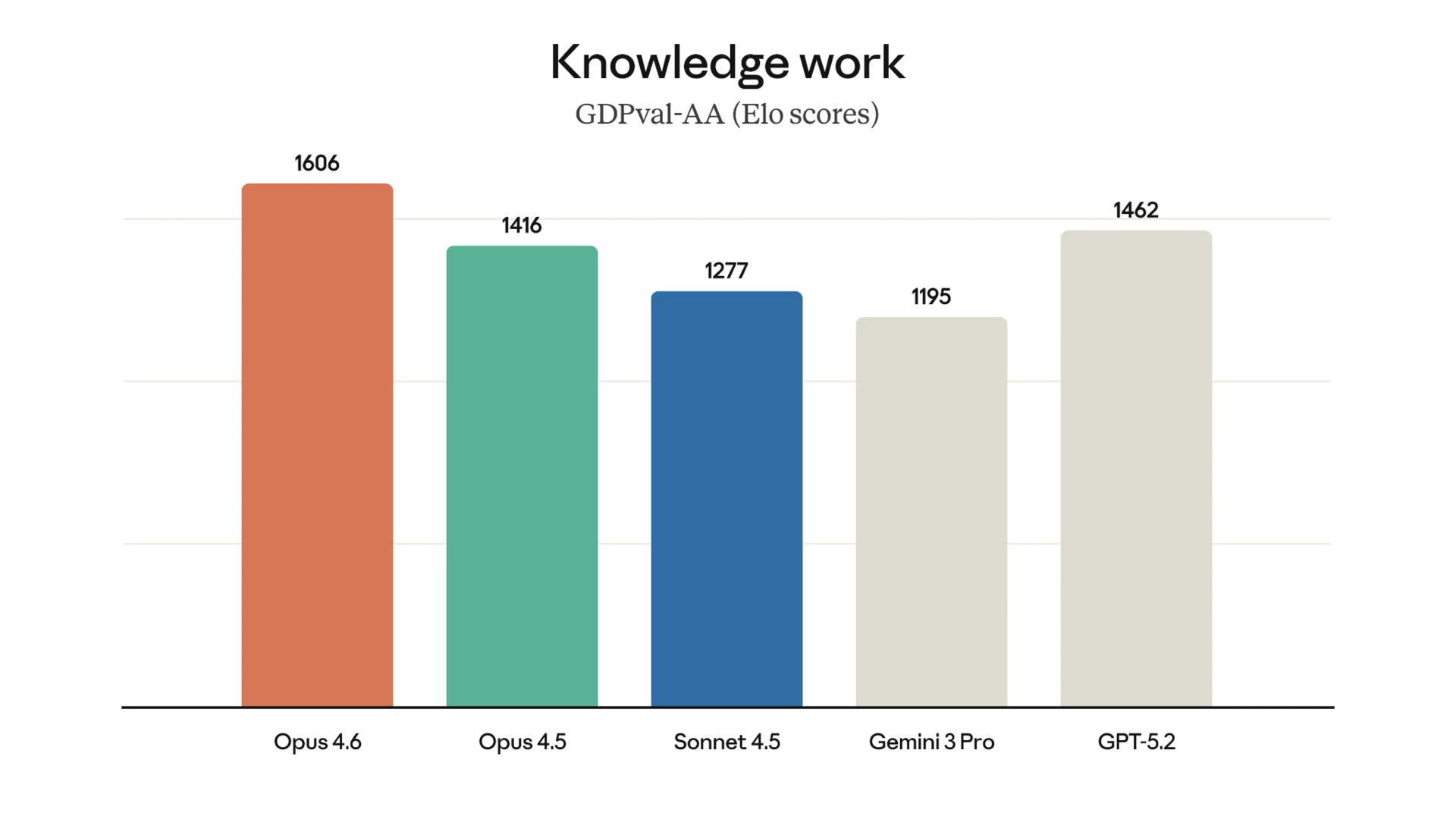
Anthropic just shipped Opus 4.6, the latest version of its most advanced model (and a big one for Claude Code). The headline upgrade: agent teams — a way to split one big task into multiple smaller jobs that run in parallel, with agents coordinating directly instead of one model grinding through everything sequentially.
Anthropic’s pitch is basically “hire a team, not a solo contractor.” Faster throughput, clearer ownership, and better handling of messy, multi-part work.
👥 Agent teams: what changes in practice
Instead of one agent doing: “plan → execute step 1 → execute step 2 → execute step 3…”
Agent teams let you do:
Break work into parallel tracks (e.g., research, draft, verify, format)
Assign each agent an “ownership lane”
Coordinate outputs into one final deliverable
It’s in research preview for API users and subscribers for now.
🧾 Bigger brain, bigger files: 1M-token context
Opus 4.6 now supports a 1 million token context window, matching what Anthropic’s Sonnet line already offers. Translation: better for large codebases, long documents, and sessions where you need the model to keep a lot of moving parts in memory without dropping threads.
🖥️ Claude in PowerPoint (for real this time)
Another sneaky-big change: Claude is now integrated directly into PowerPoint as a side panel.
Previously, Claude could generate a deck, but you still had to export and then do the real editing inside PowerPoint. Now, the workflow stays inside PowerPoint — you can build and refine slides with Claude in the tool where the work actually happens.
Anthropic is positioning Opus less as “the coding model” and more as a knowledge-work engine. They’re explicitly calling out usage from PMs, financial analysts, and other non-engineering roles — people who adopted Claude Code not because they code, but because it’s one of the most capable “do the work” interfaces.

Source: SpaceX
SpaceX has acquired xAI in what’s now the largest M&A deal in history, valuing xAI at $250 billion and SpaceX at $1 trillion. It’s a bold consolidation move by Elon Musk as SpaceX gears up for a potential IPO.
The deal folds Musk’s fast-growing AI operation — maker of the Grok chatbot — directly into his space and satellite empire, tying AI development, compute, and distribution to SpaceX’s infrastructure.
📊 What the deal looks like
Record-setting acquisition: Surpasses Vodafone–Mannesmann’s $203B deal from 2000
Exchange ratio: xAI investors get 0.1433 SpaceX shares per xAI share
Optional cash-out: Some execs can take cash at $75.46 per share
Implied share price: Combined entity expected to price around $527/share
SpaceX was already the world’s most valuable private company, and this move tightens Musk’s ecosystem ahead of a rumored IPO that could push valuations past $1.5 trillion.
🧠 Why this matters
This is strategic stacking:
AI + infrastructure: xAI brings models and talent; SpaceX brings satellites, data, and global distribution
Starlink as an AI surface: AI services layered on top of an already massive cash-flow engine
Compute ambitions: Strengthens SpaceX’s push into data centers, energy, and possibly orbital compute
As one analyst put it, this turns SpaceX into an integrated infrastructure platform for commercial and government AI use cases.
⚠️ What comes next
The merger could attract regulatory scrutiny, especially given SpaceX’s deep ties to NASA, the U.S. military, and intelligence agencies — plus Musk’s overlapping leadership roles across Tesla, Neuralink, X, and more.
Still, directionally, the signal is clear: Musk is collapsing his empire into a tighter loop — AI models, data, distribution, and physical infrastructure — all under one roof.
Source: OpenAI
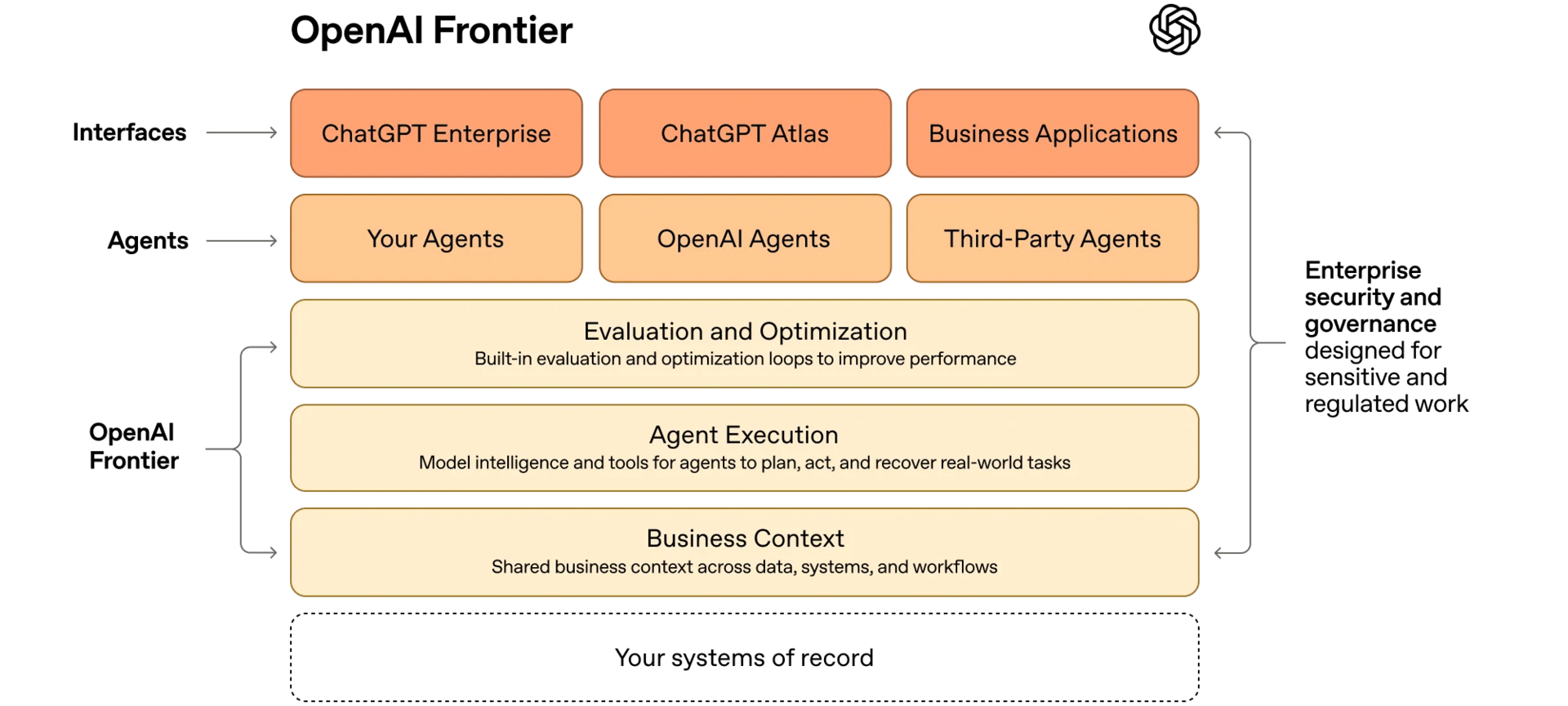
OpenAI is launching Frontier, a new enterprise platform designed to help companies build, deploy, and manage AI agents that actually do real work — not demos, not pilots, but production-grade AI coworkers.
📈 Why Frontier exists
AI has already reshaped how work gets done. 75% of enterprise workers say AI helped them do tasks they couldn’t do before, and the gains are no longer theoretical:
A manufacturer cut production optimization from six weeks to one day
A global investment firm reclaimed 90%+ of sales time using agents
An energy company boosted output by up to 5%, translating to $1B+ in revenue
Yet most enterprises are stuck deploying isolated agents with limited context, fragile governance, and unclear ownership. As models improve faster than organizations can adapt, the AI opportunity gap keeps widening.
Frontier is OpenAI’s answer to that gap.
🧠 What makes Frontier different
Instead of treating agents like tools, Frontier treats them like employees.
The platform is built around the same fundamentals companies already use to scale people: onboarding, shared context, feedback loops, permissions, and accountability. AI coworkers get access to the systems they need, learn from real work, and operate within boundaries teams can trust.
At a high level, Frontier helps agents:
Understand the business by connecting CRMs, data warehouses, internal tools, and workflows into a shared semantic layer
Plan and act across real systems — running code, handling files, completing multi-step tasks, and retaining memory over time
Improve with feedback, using built-in evaluation and optimization so performance gets better as work evolves
Operate safely, with clear identities, permissions, and enterprise-grade governance baked in
All of this works across clouds and existing systems, without forcing companies to replatform or abandon agents they’ve already built.
🧩 How teams actually use it
Frontier-powered AI coworkers aren’t locked behind a single interface. They can show up wherever work happens — inside ChatGPT Enterprise, through OpenAI Atlas workflows, or embedded directly in existing business applications.
That flexibility is key. It means AI coworkers can partner with humans in real workflows, not just chat windows.
Early adopters include State Farm, Oracle, Thermo Fisher Scientific, Uber, HP, Intuit, and others, with pilots already running at companies like BBVA, Cisco, and T-Mobile.
OpenAI pairs customers with Forward Deployed Engineers (FDEs) who work directly with internal teams to move agents from pilot to production. That hands-on deployment feeds back into OpenAI’s research, tightening the loop between real-world enterprise needs and model development.
🎯 Everything else you missed this week.

Source: Anthropic
⚡ The Neural Frontier’s weekly spotlight: 3 AI tools making the rounds this week.
1. ✨ Rehumanize is a free AI text humanizer that converts AI-generated content from ChatGPT, Claude, and Gemini into natural, undetectable human writing while preserving original meaning, supporting 50,000-word batch processing and multi-format exports.
2. 🔍 Lucid Engine is an AI search visibility platform that tracks brand citations and rankings across ChatGPT, Perplexity, and Google AI Overviews, providing competitor analysis, sentiment tracking, and prioritized optimization actions to increase AI-driven recommendations for e-commerce brands.
3. 📝 HyNote is an AI note-taking platform that transcribes meetings, audio, PDFs, YouTube videos, and web pages into structured summaries with action items, featuring real-time speech-to-text, speaker identification, and seamless integration with Google, Notion, and productivity tools.
All in all…
This was deffo a week we didn’t see coming. From acquisitions to product rollouts, it was a pretty fun ride, to say the least.
You know how it goes: keep an eye on that inbox, and we’ll catch you next week on the Neural Frontier 👋!